
Quantum Computing Explained Simply
For decades, the classical computer has been the undisputed workhorse of the digital age. But as we push the boundaries of artificial intelligence, drug discovery, and cryptography, we are hitting a fundamental wall. Enter quantum computing—a paradigm shift that doesn’t just make computers faster, but fundamentally alters the rules of computation. This article strips away the physics jargon and offers a clear, professional explanation of what quantum computing is, how it works, and why it matters.
The Problem with Classical Bits
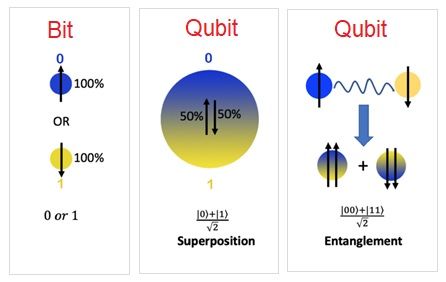
To understand quantum computing, you must first appreciate the limitation of the classic bit. In a conventional computer, information is stored as a sequence of bits, and each bit is a binary switch: either a 0 or a 1. Every operation—from rendering a video to calculating your taxes—is a series of these binary decisions. This system is reliable, but it is sequential. To solve a complex problem, a classical computer must explore possibilities one at a time.
Consider a maze with a million possible paths. A classical computer will check each path, one by one, until it finds the exit. This is fine for small mazes, but for real-world problems like simulating molecular interactions, the number of paths explodes exponentially. Even a supercomputer with billions of transistors would take longer than the age of the universe to solve certain problems.
Enter the Qubit: Superposition and Entanglement
Quantum computing replaces the bit with a qubit (quantum bit). Unlike a classical bit, a qubit can exist in a state of superposition. This means it can be a 0, a 1, or—crucially—any proportion of both at the same time. Think of a spinning coin: while it spins, it is neither heads nor tails, but a probabilistic blend of both. Only when you stop it does it “collapse” into a definitive state.
Superposition alone is powerful, but the real magic comes from another quantum phenomenon: entanglement. When two or more qubits become entangled, their states are linked. Measuring one immediately determines the state of the other, regardless of the physical distance between them. This correlation is not just “highly correlated”—it is mathematically absolute. As you add more entangled qubits, the computing power grows not linearly, but exponentially. Two qubits can represent four states simultaneously, three qubits eight states, and fifty qubits can represent over a quadrillion states at once.
A Simple Analogy: The Library vs. The Orchestra
Imagine you are searching for a specific sentence in a huge library filled with books. A classical computer acts like a single diligent librarian. It checks Book 1, then Book 2, then Book 3—sequentially. If there are 10,000 books, it performs 10,000 checks.
A quantum computer acts like an entire orchestra where every musician is playing every instrument at once. Each qubit represents a musician, but because of superposition, each musician is playing all possible notes simultaneously. Entanglement ensures that when one musician changes their note, all the others instantly adjust in harmony. Instead of reading books one by one, the quantum system “reads” all 10,000 books simultaneously, collapsing the solution in a fraction of a second.
How Quantum Computers Actually Work
Building a working quantum computer is enormously difficult. Qubits are extremely fragile; any interaction with the environment—heat, electromagnetic radiation, even stray light—causes a phenomenon called decoherence, where the qubit loses its quantum state. Here is a breakdown of the core components:
- Qubit Physical Implementation: Qubits can be made from superconducting circuits (operated at near-absolute-zero temperatures), trapped ions, photons, or silicon spin qubits.
- Quantum Gates: Instead of logic gates (AND, OR, NOT), quantum computers use quantum gates (e.g., Hadamard, Pauli-X, CNOT) that manipulate the probability amplitudes of superposition and create entanglement.
- Measurement: At the end of a calculation, you measure the qubits. The result collapses the superposition into a string of classical 0s and 1s. The challenge is designing algorithms that make the correct answer overwhelmingly probable.
- Error Correction: Quantum states are noisy. Therefore, quantum error correction uses multiple physical qubits to encode a single logical qubit, allowing the system to detect and correct errors.
What Quantum Computers Can Solve (And What They Can’t)
It is a common misconception that quantum computers will replace your laptop or desktop. They will not. For tasks like web browsing or word processing, classical computers remain vastly superior. Quantum computers are specialized problem solvers. They excel only at problems where the search space is immense and the structure is suitable for quantum algorithms.
Key Application Areas
| Drug Discovery | Simulating molecular structures and chemical reactions at the quantum level. | Classical simulation requires exponential resources; impossible for molecules beyond ~50 atoms. |
| Cryptography | Shor’s algorithm can break RSA and ECC encryption by factoring large integers. | Classical factoring is computationally prohibitive for 2048-bit keys. |
| Optimization | Solving logistics, supply chain, and portfolio optimization problems with thousands of variables. | Classical algorithms get stuck in local minima; brute force is too slow. |
| Machine Learning | Quantum-enhanced support vector machines and clustering for high-dimensional data. | Training classical models on massive datasets consumes extreme energy and time. |
| Material Science | Finding new superconductors, batteries, and catalysts by simulating electron behavior. | Classical physics does not fully capture quantum interactions. |
Importantly, quantum computers are not general-purpose accelerators. For many conventional tasks—like sorting a database—quantum algorithms offer little to no speedup. The field of quantum supremacy refers to a quantum computer solving a specific problem that is practically impossible for any classical computer, which was first demonstrated by Google’s Sycamore processor in 2019.
The Current State and the Road Ahead
As of 2025, we are in the **Noisy Intermediate-Scale Quantum (NISQ)** era. Current quantum processors have between 50 and 1,000 qubits, but they are “noisy” and error-prone. We are not yet at the point of large-scale, fault-tolerant quantum computers. However, several critical milestones have been achieved:
The industry is also building quantum-error-correcting codes that use logical qubits. For example, instead of one physical qubit, you use nine physical qubits to represent one reliable logical qubit. This redundancy is the key to scaling beyond the NISQ era.
Why Every Tech Professional Should Care
Quantum computing is not a far-off fantasy. Cloud providers like AWS, Microsoft Azure, and IBM Cloud already offer quantum processing units (QPUs) as pay-per-use services. Financial firms are experimenting with quantum risk analysis, and pharmaceutical companies are running quantum simulations for novel drug candidates.
The strategic implications are profound. If a fault-tolerant quantum computer is built within the next decade, it will break current public-key encryption standards, forcing an urgent migration to post-quantum cryptography. Yet, it also offers unprecedented tools for clean energy, personalized medicine, and AI. Professionals who understand the logic of quantum algorithms—even without a physics degree—will be uniquely positioned to lead the next wave of technological innovation.
Conclusion: The Future is Quantum (But Not Magic)
Quantum computing is not a magical black box that solves everything instantly. It is a precise, counterintuitive, and extraordinarily powerful tool for a specific class of combinatorial problems. Its core principles—superposition and entanglement—allow us to explore computational spaces that are impossible for classical machines. While we are still in the early days of hardware maturity, the software ecosystem is rapidly evolving. As a professional, the smartest move is to learn the fundamentals, experiment with cloud-based quantum simulators, and start thinking about which problems in your domain might benefit from a qubit. The era of quantum advantage is not coming; it has already begun.