What Is Cloud Computing and Why It Matters
In the modern technological landscape, the term “cloud computing” has transcended jargon to become the foundational infrastructure of digital transformation. Yet, for many businesses and IT professionals, the concept remains abstract, often conflated with simple internet-based storage. This article demystifies cloud computing, dissects its core mechanics, and articulates why its adoption is no longer a strategic option but a competitive imperative.
Defining Cloud Computing: Beyond the Metaphor
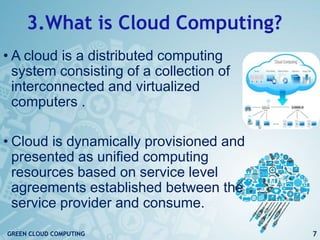
At its most rigorous definition, cloud computing is the on-demand availability of computer system resources—especially data storage and computing power—without direct active management by the user. The term “cloud” historically originated as a diagrammatic representation of the internet, but in practice, it denotes a network of remote servers hosted on the internet to store, manage, and process data, rather than a local server or a personal computer.
The National Institute of Standards and Technology (NIST) provides the most authoritative framework, identifying five essential characteristics that separate genuine cloud services from mere web-based applications:
- On-demand self-service: Users can provision computing capabilities automatically without requiring human interaction with each service provider.
- Broad network access: Capabilities are available over the network and accessed through standard mechanisms by heterogeneous client platforms (e.g., mobile phones, laptops, and workstations).
- Resource pooling: The provider’s computing resources are pooled to serve multiple consumers using a multi-tenant model, with physical and virtual resources dynamically assigned and reassigned according to consumer demand.
- Rapid elasticity: Capabilities can be elastically provisioned and released, often automatically, to scale rapidly outward and inward commensurate with demand.
- Measured service: Cloud systems automatically control and optimize resource use by leveraging a metering capability at some level of abstraction appropriate to the type of service (e.g., storage, processing, bandwidth).
The Three Service Models: IaaS, PaaS, and SaaS
Understanding cloud computing requires a clear differentiation of its service layers. Each model abstracts a different level of the technology stack, transferring operational responsibility from the consumer to the provider.
| Infrastructure as a Service (IaaS) | Applications, data, runtime, middleware, OS | Virtualization, servers, storage, networking | Migrating a legacy data center to virtual machines (e.g., AWS EC2, Azure VMs) |
| Platform as a Service (PaaS) | Applications and data | Runtime, middleware, OS, virtualization, servers, storage, networking | Developing a custom web app without managing the underlying server (e.g., Google App Engine, Heroku) |
| Software as a Service (SaaS) | Nothing (just user configuration) | Everything including the application itself | Enterprise email, CRM, or collaboration tools (e.g., Microsoft 365, Salesforce) |
The Deployment Models: Public, Private, and Hybrid
Equally critical is the architectural choice of where cloud resources reside. The three primary deployment models differ on ownership, control, and security posture:
Why It Matters: The Strategic and Operational Imperatives
The relevance of cloud computing extends far beyond technical efficiency. It fundamentally alters the economics of IT and the velocity of innovation. Here is why it matters to any modern organization:
1. CapEx to OpEx Transformation and Cost Optimization
Traditional IT requires significant capital expenditure (CapEx) for hardware procurement, data center construction, and long-term depreciation. Cloud computing shifts this to an operational expenditure (OpEx) model with pay-as-you-go pricing. This eliminates upfront costs, reduces idle resource waste, and converts fixed IT costs into variable costs that scale directly with business revenue. Enterprises can reallocate capital toward research, product development, and market expansion.
2. Unprecedented Agility and Time-to-Market
In a pre-cloud era, launching a new application could take months, constrained by hardware procurement cycles and provisioning lead times. Cloud computing provides self-service access to resources in minutes. Development teams can spin up test environments, iterate on code, and deploy production workloads without waiting for internal IT approval. This acceleration of the software development lifecycle is the direct enabler of DevOps and continuous delivery practices, compressing the journey from idea to implementation.
3. Global Scale and Elasticity Under Demand Spikes
The ability to scale resources automatically is perhaps the most technically critical advantage. Cloud platforms monitor application metrics and automatically add or remove compute instances in response to traffic fluctuations. Whether handling a viral marketing campaign, seasonal e-commerce peaks, or an unexpected analytics workload, cloud elasticity prevents both degraded performance and over-provisioning. This auto-scaling capability is mathematically impossible to replicate with physical hardware without significant margin costs.
4. Enhanced Security and Compliance Resilience
While the shared responsibility model requires users to secure their applications, leading cloud providers invest billions in physical security, network firewalls, encryption, and threat intelligence—far beyond the reach of most mid-sized enterprises. They maintain compliance certifications (e.g., ISO 27001, SOC 2, HIPAA) and offer native security tools such as identity and access management (IAM), key management, and security information and event management (SIEM). Moreover, data redundancy across multiple availability zones ensures business continuity against regional outages, natural disasters, or ransomware attacks.
5. Innovation Enablement through Advanced Services
Cloud platforms are no longer just infrastructure; they are the primary distribution channel for cutting-edge technologies. Without cloud computing, artificial intelligence (AI), machine learning (ML), big data analytics, Internet of Things (IoT), and serverless computing would be inaccessible to all but the largest technology enterprises. Cloud providers offer pre-trained models, GPU clusters for training, streaming pipelines for real-time analytics, and event-driven serverless functions—all consumable via API calls. This democratizes innovation, allowing a startup to leverage the same AI capabilities as a Fortune 500 company.
6. Fostering Remote Work and Global Collaboration
The post-pandemic workforce is geographically distributed, and cloud computing is the connective tissue. SaaS collaboration tools, virtual desktop infrastructure (VDI), and cloud file storages enable employees to access corporate resources securely from any device. This flexibility not only boosts employee satisfaction but also widens the talent pool available to an organization, unconstrained by geographic location.
Conclusion: The Cloud as a Business Strategy
Cloud computing is not merely a technological migration—it is a paradigm shift in how value is created. It transforms IT from a cost center into a driver of differentiation. Organizations that master cloud adoption gain the ability to respond to market changes with speed, optimize resource utilization with precision, and build resilient architectures that withstand disruption. As we move toward multi-cloud and edge computing, the fundamental principles remain unchanged. The question is no longer whether to adopt the cloud, but how strategically to leverage its full potential to outpace competitors and redefine industry standards. The cloud is not the future; it is the operative present, and those who fail to embrace it risk becoming the laggards of the digital economy.