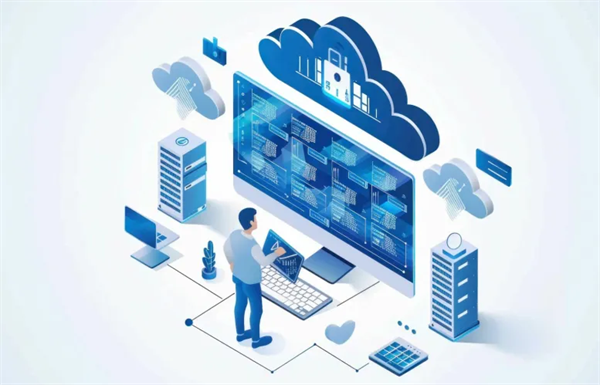

Cloud Security Best Practices: A Definitive Guide for Modern Enterprises
As organizations accelerate their digital transformation, the migration to cloud infrastructure has shifted from a competitive advantage to a business necessity. However, with this agility and scalability comes a new paradigm of risk. Traditional perimeter-based security models are obsolete; the shared responsibility model demands that enterprises take an active role in protecting their data, applications, and workloads. This article outlines the essential, non-negotiable best practices for fortifying your cloud environment against evolving threats.
Understanding the Shared Responsibility Model
Before implementing any technical controls, your organization must clearly delineate security ownership. In the cloud, the provider (AWS, Azure, GCP) secures the physical infrastructure, hypervisor, and foundational network. Your team is responsible for securing everything you deploy within that environment: access management, data classification, application configuration, and network traffic controls.
Misunderstanding this boundary is the root cause of most high-profile cloud breaches. Treat every resource you provision as your direct responsibility. Assume that misconfigurations are vulnerabilities until proven otherwise.
Foundational Identity and Access Management (IAM)
The most critical control in any cloud environment is identity. If an attacker obtains valid credentials, they can bypass even the most sophisticated encryption. Implement the principle of least privilege relentlessly.
Key IAM Strategies
- Enforce Multi-Factor Authentication (MFA): Mandate MFA for all users, especially administrative and root accounts. Hardware security keys are preferable to SMS-based verification.
- Use Temporary Credentials: Avoid long-lived access keys. Instead, leverage identity federation and short-term, role-based credentials that automatically rotate.
- Implement Role-Based Access Control (RBAC): Assign permissions based on job function, not individual user. Never grant blanket “admin” rights to developers who only need specific service access.
- Conduct Regular Access Reviews: Quarterly, audit every IAM role, policy, and user group. Remove dormant accounts and revoke unused permissions immediately.
Data Protection and Encryption
Data is the primary asset under threat. Your strategy must cover data at rest, in transit, and in use. Relying solely on provider-side encryption is insufficient.
Data Security Protocols
Network Security and Segmentation
Cloud networks are software-defined, which allows for granular segmentation. Yet, many organizations treat their cloud VPCs as a flat network, enabling lateral movement after an initial compromise.
Network Hardening Tactics
- Micro-segmentation: Divide your workloads into distinct security zones. Use security groups and network ACLs to restrict traffic between application tiers (e.g., web, application, database).
- Private Networking: Never expose databases or backend services to the public internet. Use private subnets and VPC endpoints for all sensitive communications.
- Centralized Egress Filtering: Route all outbound traffic through a centralized inspection point (e.g., a firewall or proxy). This enables threat detection and prevents data exfiltration via non-standard protocols.
- Disable Unused Services: Turn off any cloud provider services or features not in active use. The less attack surface, the better.
Continuous Monitoring and Logging
You cannot secure what you cannot see. A robust observability framework is essential for detecting anomalies, auditing compliance, and conducting forensic analysis.
Essential Monitoring Components
- Centralized Log Aggregation: Stream all logs (CloudTrail, VPC Flow Logs, application logs) into a single, tamper-proof data lake. Enable object-level logging for critical storage buckets.
- Real-time Alerting: Configure alerts for high-risk events: unauthorized API calls, failed MFA attempts, unusual data downloads, or changes to security group rules. Use a SIEM solution to correlate signals across disparate services.
- GuardDuty or Equivalent: Deploy cloud-native threat detection services that use machine learning to identify suspicious activity, such as crypto-mining or port scanning from your instances.
- Immutable Logs: Set the log retention policy to prevent deletion by rogue administrators. Store logs in a separate account or use Write-Once-Read-Many (WORM) storage.
Configuration Management and Automation
Manual configuration is the primary source of cloud security errors. Infrastructure as Code (IaC) and policy-as-code enable you to enforce security at the time of deployment, not after the fact.
Automation Best Practices
- Use Infrastructure as Code (IaC): Define all network, compute, and storage resources in code (Terraform, CloudFormation). This ensures consistency and eliminates “snowflake” servers.
- Implement Policy as Code: Use tools like Open Policy Agent (OPA) or Sentinel to automatically reject any IaC deployment that violates security policy (e.g., public S3 buckets, unencrypted volumes).
- Continuous Compliance Scanning: Regularly scan your live environment against CIS benchmarks and industry standards (SOC 2, HIPAA, GDPR). Automate remediation for non-compliant resources.
- Immutable Infrastructure: Instead of patching running servers, replace them with fresh, hardened images. This reduces configuration drift and ensures that patches are correctly applied.
Incident Response and Recovery
Your security posture will eventually be tested. A well-practiced incident response plan is as crucial as any preventative tool. Build a cloud-specific runbook that addresses the unique challenges of a remote environment.
| Detection | Validate the alert, isolate the compromised resource | SIEM, CSP Security Hub |
| Containment | Disable IAM keys, detach storage, revoke network access | IAM Policy Simulator, Security Groups |
| Eradication | Snapshot the affected volume, terminate the instance | CloudWatch Logs, Forensic Tools |
| Recovery | Restore from clean backups, rotate all secrets | Backup Vaults, Secrets Manager |
| Post-mortem | Analyze root cause, update IaC policies | Jira, Confluence, Code Repos |
Finally, automate your backups and test the restoration process monthly. A backup that cannot be restored is a liability, not a safeguard. By integrating these practices into your development lifecycle, you transform cloud security from a checklist into a resilient, adaptive capability that supports business growth rather than constraining it. The cloud is not inherently insecure; it is inherently complex. Master that complexity with deliberate, automated, and continuous rigor.