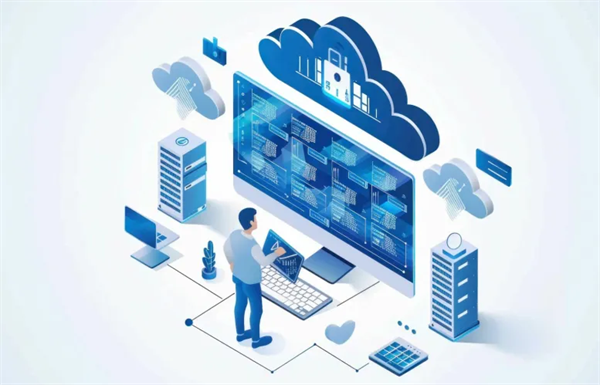

Cloud Computing Trends for Businesses in 2025
The cloud is no longer a competitive advantage; it is the operational baseline for modern enterprises. However, the landscape of cloud computing is shifting with unprecedented velocity, driven by generative AI, cost optimization mandates, and geopolitical pressures. For business leaders and IT decision-makers, understanding these trends is not about keeping pace — it is about maintaining relevance. Below, we dissect the five most critical cloud trends that will define enterprise strategy this year and beyond.
1. The Rise of the Distributed Cloud and Edge Intelligence
Centralized hyperscale data centers are increasingly ill-suited for workloads that demand millisecond latency, data sovereignty, or offline resilience. The distributed cloud paradigm is now moving from pilot projects to production deployment. This model extends the public cloud’s control plane to physically distributed locations — from on-premises edge nodes to telco base stations and even retail outlets.
For businesses, this translates into a fundamental architectural shift. Instead of sending every data point to a centralized region, processing occurs at the point of origin. Consider a manufacturing plant using computer vision for quality control: latency is critical, and network downtime is unacceptable. A distributed cloud architecture allows the plant to run its AI models locally while still benefiting from centralized management, policy enforcement, and seamless updates via the provider’s API. The strategic implication is clear: the cloud is no longer a place; it is an operating model that extends anywhere your infrastructure exists.
Key Action Items for Edge Adoption
- Audit workloads that are latency-sensitive or data-residency-constrained.
- Evaluate managed edge solutions from major providers (AWS Outposts, Azure Stack, Google Distributed Cloud) versus third-party orchestration layers.
- Plan for network resilience and local storage redundancy, not just compute at the edge.
2. FinOps Matures from Cost-Cutting to Value Engineering
After years of cloud waste scandals and budget overruns, the discipline of FinOps has moved from a niche practice to a board-level mandate. However, the trend is shifting from simple cost reduction (e.g., right-sizing idle instances) to value-based optimization. Businesses are now linking cloud spend directly to product revenue and feature profitability.
The new generation of FinOps tools uses AI-driven anomaly detection and automated resource allocation to continuously adjust compute capacity based on demand curves. This is not static reclamation; it is dynamic, bidirectional scaling. Moreover, with the rise of sophisticated spot and reserved capacity strategies, enterprises are treating cloud pricing as a financial market to be traded, not a utility bill to be paid. The key metric is no longer “cost per server hour” but “cost per delivered business transaction.” This requires a cultural shift where engineering teams are accountable for unit economics, not just uptime.
Unit Economics Model Comparison
| Primary Metric | Total infrastructure spend | Cost per active user / per transaction |
| Focus | Reactive reclamation of idle resources | Proactive workload placement and architecture redesign |
| Tooling | Basic dashboards and alerts | AI-driven predictive analytics and automated remediation |
| Team Culture | Centralized cloud team controls budget | Decentralized engineering squads own cost KPIs |
3. AI-Native Cloud Architectures and the GPU Conundrum
Generative AI has fundamentally altered cloud procurement. The scarcity and cost of GPUs (NVIDIA H100/H200, AMD MI300) have created a new bottleneck. Businesses are no longer simply renting virtual machines; they are co-designing infrastructure around GPU clusters, high-throughput interconnects, and specialized vector databases. The trend is toward AI-native clouds — platforms that are architected from the ground up for machine learning workloads.
This has several practical implications. First, multi-cloud strategies are becoming GPU-centric, not just workload-centric. A business may run its standard microservices on one provider, but its LLM fine-tuning jobs on another that offers superior GPU availability or pricing. Second, we are seeing a surge in “AI-as-a-service” wrappers that abstract away the infrastructure complexity. However, organizations with proprietary data and high compliance requirements are increasingly building private AI clouds on their own hardware to avoid data leakage and to ensure model customizability.
The strategic question is not “should we use AI?” but “where and how should we train, fine-tune, and infer to balance performance, cost, and IP security?” The answer will dictate your cloud vendor contracts for the next three to five years.
4. Sovereign Cloud and Regulatory-Driven Localization
Data residency requirements, once a European GDPR concern, have become a global reality. From Brazil’s LGPD to China’s Cybersecurity Law and industry-specific mandates in healthcare and finance, the pressure to keep data within specific jurisdictions is immense. This has given rise to the sovereign cloud — a cloud offering that guarantees data, administrative access, and technical operations remain within a country’s borders and under local jurisdiction.
Major hyperscalers are now offering “sovereign by design” regions that separate control plane operations from data plane operations. For multinational enterprises, this is a logistical hurdle. You cannot have a single global cloud strategy; you need a federated model with local zones, regional compliance gates, and contractual data residency guarantees from your provider. Failure to adapt means heavy fines and operational shutdowns in key markets. The due diligence process is evolving from security questionnaires to geopolitical risk assessment of your cloud provider’s supply chain and legal jurisdiction.
5. Cloud Sustainability as a Procurement Criterion
While initially a public relations talking point, cloud sustainability has become a tangible business metric due to ESG reporting regulations and investor pressure. However, the trend is shifting from purchasing “carbon offsets” to optimizing for code and algorithm efficiency. The most energy-intensive part of a cloud stack is increasingly the AI training layer, which can consume megawatts of power.
Enterprises are now demanding granular reporting on the carbon footprint of specific workloads and even individual API calls. Consequently, cloud providers are investing heavily in carbon-intelligent scheduling — automatically shifting non-urgent batch workloads to regions where renewable energy is plentiful at that time of day. For businesses, this means factoring energy efficiency into workload placement.
Strategic Conclusion
The cloud ecosystem of 2025 is defined by complexity and fragmentation. The era of simplistic “lift and shift” migration is over. Today’s leaders must synthesize distributed architectures, GPU economics, sovereign constraints, and sustainability mandates into a coherent, agile operating model. The successful enterprise will not merely consume cloud services; it will actively orchestrate them as a dynamic, financial, and geopolitical asset. The question is no longer if you are in the cloud, but how intelligently you operate within it.